Reward Layering Systems Connecting Table Game Rounds to Reel Sequences in Regulated Mobile Environments
Yves Simon · Oct 18, 2026

Reward Layering Systems Connecting Table Game Rounds to Reel Sequences in Regulated Mobile Environments
Regulated mobile gaming platforms integrate reward layering to link outcomes from table game rounds with sequences on slot reels through structured bonus mechanisms that comply with oversight requirements across multiple jurisdictions. These systems track player activity across different game types and apply layered rewards such as multipliers or additional spins based on predefined triggers from roulette or blackjack rounds that carry over into reel-based gameplay.
Core Mechanics of Reward Layering
Operators design reward layering protocols so that completed table game rounds generate data points which feed into slot reel sequences without violating fairness standards set by regulatory bodies. A single roulette spin might produce a base reward that layers onto a subsequent slot session by unlocking reel modifiers or enhanced payout structures during designated sequences. Data from mobile applications shows these connections operate through backend algorithms that synchronize session histories while maintaining separate random number generators for each game category.
Implementation involves real-time tracking modules that record round completions and apply conditional rewards according to rules established in licensing agreements. Players encounter these layered effects when a table game result activates a reel feature such as stacked symbols or progressive elements that build across multiple spins. Technical documentation from platform providers outlines how these processes use encrypted ledgers to log every transfer of reward value between game types to support audit trails required under international standards.
Integration in Mobile Application Frameworks
Mobile environments facilitate reward layering through unified player accounts that aggregate activity from both table and reel games within a single interface. Application programming interfaces connect live dealer sessions with automated reel engines so that rewards earned in one area activate automatically during the next sequence without manual intervention. This setup allows operators to maintain continuous engagement while adhering to session time limits and spending controls enforced by regulatory frameworks in regions including North America and parts of Europe.
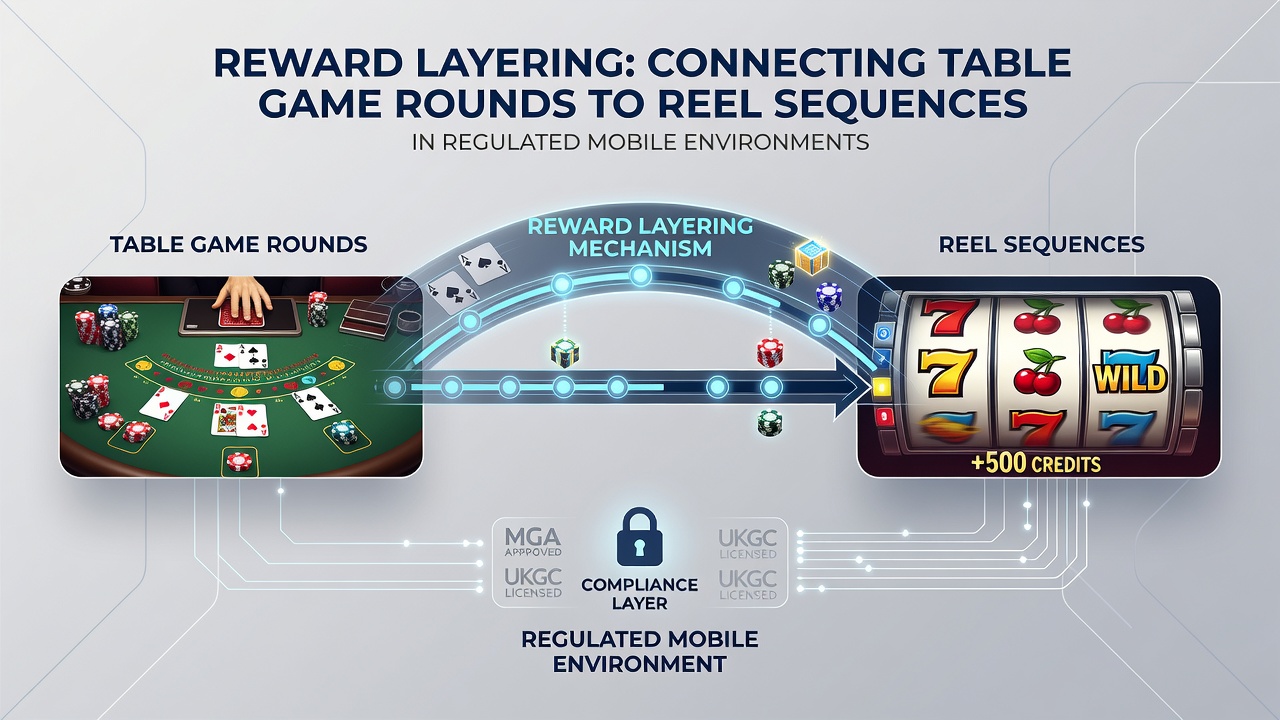
Software updates rolled out in October 2026 introduced enhanced synchronization features that reduced latency between table round completions and reel activations in several major platforms. These changes addressed previous delays reported in user sessions and aligned with technical guidelines issued by authorities such as the Nevada Gaming Control Board. Observers note that such refinements support smoother transitions while preserving the integrity of each game's independent outcome generation process.
Regulatory Oversight and Compliance Structures
Regulated markets require detailed reporting on how reward layering affects overall return-to-player percentages across combined game categories. Licensing conditions often mandate that layered rewards remain transparent to players and do not alter the fundamental odds of individual rounds or sequences. Agencies in Canada and Australia have published frameworks that require operators to demonstrate through simulation testing that cross-game reward transfers maintain statistical fairness over large sample sizes.
Industry reports from the European Gaming and Betting Association highlight that compliance teams conduct regular reviews of layering algorithms to confirm they meet data protection and consumer safeguard criteria. These evaluations include analysis of how mobile notifications inform users about active layered rewards without creating pressure to continue play beyond voluntary limits. Research from academic institutions such as the University of Nevada, Reno, has examined similar systems and found that structured layering can distribute reward opportunities more evenly when calibrated against regulatory benchmarks.
Practical Examples Across Platforms
One documented case involves a mobile operator that tied specific blackjack round outcomes to reel symbol enhancements in subsequent slot sessions during promotional periods. The system recorded each qualifying hand and applied the corresponding modifier only after the player initiated a new reel sequence within the same account session. Similar approaches appear in platforms operating under multiple licenses where cross-game data flows require separate approval from each jurisdiction's oversight body.
Another instance shows integration of live roulette results with jackpot reel progressions where cumulative table round contributions increase the frequency of bonus triggers on the slot side. Developers implemented these features through modular code that allows regulators to inspect and verify the weighting applied to each layer before deployment. Figures from independent testing laboratories indicate that such configurations undergo thousands of simulated cycles to validate compliance prior to public release.
Conclusion
Reward layering establishes defined pathways that connect table game rounds to reel sequences while operating under the constraints of regulated mobile environments. Technical implementations rely on synchronized tracking and conditional activation rules that support both player engagement and mandatory reporting obligations. Ongoing refinements continue to align these systems with evolving standards from diverse regulatory sources around the world.